
Uncategorized
How to Store Peptides Properly
May
How to store peptides have become increasingly popular in the fields of wellness, skincare, fitness, anti-aging, and scientific research. Whether you are using peptides for laboratory purposes, cosmetic formulations, or personal wellness goals, proper storage is one of the most important factors that determine their effectiveness and shelf life. Many people spend significant amounts of money purchasing high-quality peptides but unknowingly reduce their potency through poor handling and improper storage conditions. Heat, moisture, sunlight, and contamination can quickly degrade peptides and make them less effective.
In this guide, you will learn how to store peptides properly, avoid common mistakes, and preserve their stability for as long as possible.
Why Proper Peptide Storage Matters
Peptides are delicate chains of amino acids that can easily break down when exposed to unfavorable environmental conditions. Unlike many conventional supplements, peptides are highly sensitive to temperature changes, humidity, and bacterial contamination.
Improper storage can lead to:
- Loss of peptide potency
- Reduced effectiveness
- Chemical degradation
- Increased contamination risk
- Shortened shelf life
Proper storage helps maintain the structural integrity and biological activity of peptides, ensuring that they perform as intended.
Understanding the Two Main Forms of Peptides
Before discussing storage techniques, it is important to understand that peptides usually come in two forms:
- Lyophilized (Freeze-Dried) Peptides
These are dry powdered peptides stored in sealed vials. Freeze-dried peptides are generally more stable and have a longer shelf life than liquid peptides.
- Reconstituted Peptides
These are peptides that have been mixed with a liquid solution such as bacteriostatic water. Once reconstituted, peptides become significantly more sensitive and require stricter storage conditions.
The storage recommendations differ slightly for each form.
Best Temperature for Storing Peptides
Temperature is the single most important factor in peptide preservation.
Storing Lyophilized Peptides
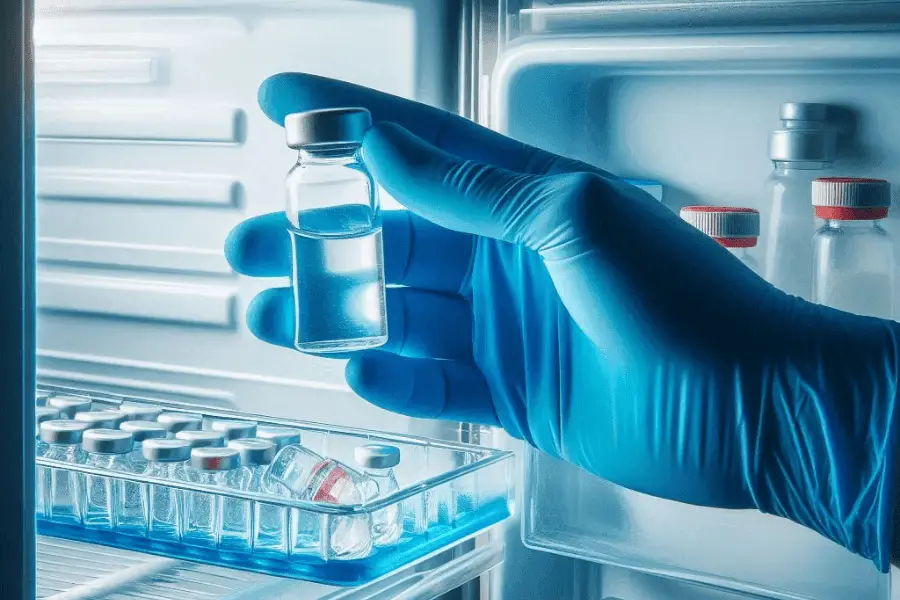
Freeze dried peptides should ideally be stored in a refrigerator at temperatures between 2°C and 8°C (36°F to 46°F). For longterm storage, many laboratories prefer keeping peptides in a freezer at around -20°C (-4°F). This can help preserve stability for several months or even years depending on the peptide type.
Storing Reconstituted Peptides
Once mixed with liquid, peptides should almost always be refrigerated immediately. The ideal temperature range remains:
- 2°C to 8°C (36°F to 46°F)
Reconstituted peptides generally have a much shorter lifespan and should be used within a few weeks depending on the specific compound and storage conditions.
Protect Peptides from Light Exposure
Direct sunlight and UV radiation can damage peptide structures over time. This is why many peptide vials are manufactured using amber or darkcolored glass.
To minimize light exposure:
- Store peptides in their original packaging
- Keep vials inside a dark refrigerator compartment
- Avoid leaving peptides on countertops or near windows
- Limit unnecessary exposure during handling
Even indoor lighting can contribute to gradual degradation over long periods.
Avoid Moisture and Humidity
Moisture is another major enemy of peptide stability, especially for lyophilized powders.
Exposure to humidity can:
- Cause peptide clumping
- Accelerate degradation
- Promote contamination
To reduce moisture exposure:
- Keep vials tightly sealed
- Avoid opening containers unnecessarily
- Store peptides in dry environments
- Use airtight storage containers when possible
If condensation forms on a peptide vial after removing it from refrigeration, allow it to reach room temperature before opening the vial.
Prevent Contamination During Handling
Contamination is a serious concern, especially for reconstituted peptides. Bacteria and other contaminants can compromise both peptide integrity and safety.
Here are some essential handling practices:
Use Sterile Equipment
Always use sterile syringes, needles, and mixing solutions.
Wash Your Hands
Clean hands help reduce the risk of introducing bacteria into the vial.
Avoid Reusing Needles
Never reuse needles or syringes when handling peptides.
Minimize Air Exposure
Repeatedly opening peptide vials increases the chance of contamination and oxidation.
Should Peptides Be Frozen?
Freezing can be beneficial for long-term peptide storage, particularly for lyophilized peptides. However, repeated freeze-thaw cycles can damage peptide chains and reduce effectiveness.
If freezing peptides:
- Store them in small aliquots if possible
- Avoid repeatedly thawing and refreezing the same vial
- Thaw peptides slowly in the refrigerator rather than at room temperature
For many users, refrigeration alone is sufficient for shortterm storage.
Common Mistakes People Make When Storing Peptides
Many peptide users unknowingly reduce product quality through simple storage mistakes.
Leaving Peptides at Room Temperature Too Long. This might be harmful to the product and its content.Extended exposure to room temperature can speed up degradation.
Using Warm Water for Reconstitution. Hot or warm water can damage sensitive peptides. Use recommended sterile solutions at appropriate temperatures.
Frequent Temperature Changes. Constantly moving peptides between warm and cold environments creates instability.
Improper Labeling
Always label peptides clearly with:
- Peptide name
- Reconstitution date
- Concentration
- Expiration timeline
Good labeling prevents confusion and accidental misuse.
How Long Do Peptides Last?
Shelf life depends on several factors including peptide type, purity, storage conditions, and whether the peptide has been reconstituted.
Generally:
- Lyophilized peptides stored properly can remain stable for months or years
- Reconstituted peptides typically last several weeks under refrigeration
Always follow manufacturer recommendations whenever available. Proper peptide storage plays a major role in maintaining peptide stability, purity, and effectiveness over time. Whether peptides are being used for research, skincare formulations, or laboratory applications, exposure to heat, moisture, sunlight, and repeated temperature changes can quickly reduce their quality. Understanding the correct storage conditions helps prevent degradation and ensures the peptide remains as potent as possible.
In general, peptides should always be stored according to the manufacturer’s instructions. Lyophilized (freeze-dried) peptides usually have a longer shelf life and are best kept refrigerated or frozen in airtight containers away from light and humidity. Once reconstituted with bacteriostatic water or another solvent, peptides become more delicate and typically require refrigeration and careful handling to avoid contamination.
It is also important to minimize repeated freeze thaw cycles, as frequent temperature fluctuations can damage peptide chains and reduce their stability. Using sterile tools, properly labeling storage containers, and dividing peptides into smaller aliquots can greatly improve long-term preservation.
By following the right storage practices, users can maximize the lifespan and reliability of their peptides while reducing waste and unnecessary replacement costs. Proper peptide handling is not just about convenience it is essential for preserving quality, consistency, and performance.
