
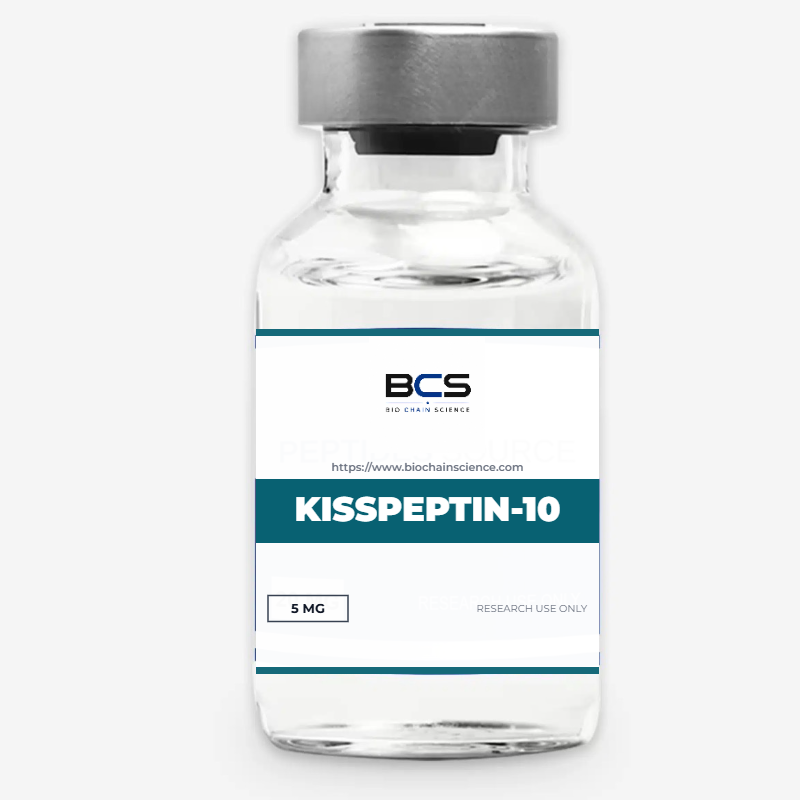
KissPeptin-10
Price range: $80.00 through $130.00
Kisspeptin-10 is a synthetic research peptide studied for its role in reproductive hormone signaling and endocrine regulation. Commonly explored in fertility and hormone research, Kisspeptin-10 may support gonadotropin-releasing hormone (GnRH) activity, influencing downstream hormones such as luteinizing hormone (LH) and follicle-stimulating hormone (FSH). It is widely researched in studies focused on reproductive biology, neuroendocrine signaling, and hormonal pathway regulation.
KissPeptin-10
Kisspeptin-10 is a synthetic peptide fragment derived from the larger kisspeptin protein family, which plays an important role in reproductive hormone signaling and endocrine regulation. It is one of the most researched peptides in fertility science because of its interaction with the hypothalamic-pituitary-gonadal (HPG) axis.
Researchers study Kisspeptin-10 for its ability to stimulate the release of gonadotropin-releasing hormone (GnRH), which may influence downstream hormones such as luteinizing hormone (LH) and follicle-stimulating hormone (FSH). This mechanism has made it an area of interest in reproductive endocrinology, hormone regulation studies, and fertility-related research.
Due to growing interest in hormone optimization and reproductive science, Kisspeptin-10 has become a widely searched peptide in the research community.
How Kisspeptin-10 Works
Kisspeptin-10 primarily functions by interacting with the GPR54 receptor, also known as the kisspeptin receptor.
When activated, this signaling pathway may:
* Stimulate GnRH secretion
* Support luteinizing hormone release
* Influence follicle-stimulating hormone production
* Regulate reproductive hormone cascades
* Support hypothalamic signaling pathways
This peptide is often studied because it acts upstream in reproductive hormone regulation, making it different from compounds that directly target testosterone or estrogen pathways.
Kisspeptin-10 in Hormone Research
Kisspeptin-10 is frequently examined in hormone-related studies due to its central role in endocrine signaling.
Reproductive Hormone Regulation
Scientists investigate Kisspeptin-10 for its ability to influence the hormonal chain responsible for reproductive function.
This includes research into:
* Gonadotropin regulation
* Puberty onset mechanisms
* Hormonal signaling balance
* Fertility hormone pathways
Testosterone Research
Because Kisspeptin-10 may stimulate GnRH and LH release, it has drawn attention in studies examining natural endocrine stimulation pathways related to testosterone production.
Researchers are interested in how upstream hormone signaling may impact downstream androgen production.
Female Fertility Studies
Kisspeptin peptides are heavily researched in female reproductive science, particularly in studies involving ovulation regulation and fertility signaling.
Areas of interest include:
* Ovarian hormone communication
* Ovulation triggers
* Menstrual cycle signaling research
Why Kisspeptin-10 Is Unique
Kisspeptin-10 stands out from many peptides because of its highly specific role in reproductive signaling.
Unique characteristics include:
* Targets hypothalamic signaling pathways
* Influences GnRH release mechanisms
* Connected to fertility and puberty research
* Studied for endocrine regulation
Unlike peptides commonly researched for muscle growth or tissue repair, Kisspeptin-10 is primarily associated with neuroendocrine and reproductive biology.
Potential Research Areas for Kisspeptin-10
Scientists continue exploring Kisspeptin-10 in several advanced research fields.
Fertility and Reproductive Science
Kisspeptin-10 remains a major subject in fertility-related investigations.
Researchers examine its role in:
* Reproductive hormone signaling
* Fertility regulation
* Ovulation studies
* Endocrine communication
Neuroendocrine Research
Because it links brain signaling with reproductive hormone output, Kisspeptin-10 is relevant in neuroendocrinology.
Research areas include:
* Brain-hormone communication
* Hormonal feedback loops
* Hypothalamic signaling networks
Puberty Research
Kisspeptin signaling is strongly associated with puberty onset and reproductive maturation.
Scientists study whether kisspeptin pathways influence developmental endocrine milestones.
Kisspeptin-10 vs Other Hormone Research Peptides
Kisspeptin-10 differs from other endocrine peptides due to its upstream regulatory role.
Kisspeptin-10
* Focuses on GnRH stimulation
* Works through GPR54 receptor pathways
* Linked to reproductive signaling
Other Hormonal Peptides
* May target growth hormone or tissue pathways directly
* Often focused on recovery or muscle-related applications
This distinction has made Kisspeptin-10 especially valuable in reproductive biology studies.
Future of Kisspeptin-10 Research
Interest in Kisspeptin-10 continues to expand as researchers explore hormone optimization and fertility science.
Potential future research directions include:
* Endocrine dysfunction studies
* Fertility hormone signaling
* Reproductive aging research
* Neuroendocrine communication models
* Hormonal pathway modulation
As reproductive biology becomes increasingly sophisticated, Kisspeptin-10 is likely to remain a highly relevant research peptide.
| Dosage | 5mg/vial, 10vial/kits, 10mg/vial, 10vial/kits |
|---|
Be the first to review “KissPeptin-10”
Related products
Sexual

Sexual
Sexual
Sexual
Sexual
Sexual
Reviews
There are no reviews yet.