
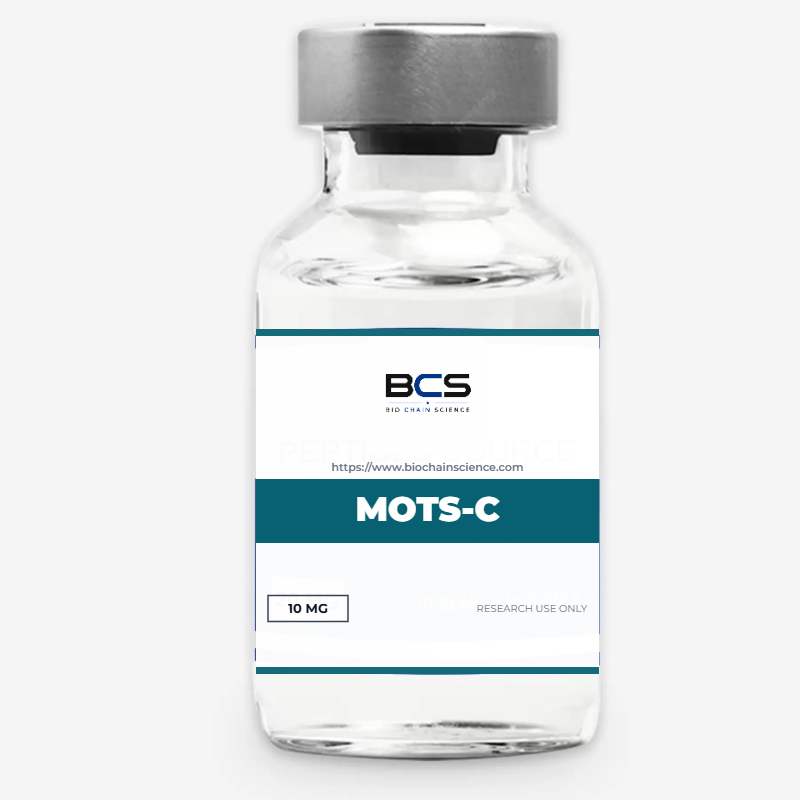
MOTS-c


Price range: $80.00 through $235.00
MOTS-c is a mitochondrial-derived research peptide primarily studied for its role in supporting metabolic regulation and cellular energy balance in laboratory settings. It is commonly researched for potential involvement in glucose metabolism, insulin sensitivity, fat utilization, and mitochondrial efficiency. Scientists also explore MOTS-c in studies related to exercise performance, healthy aging, and metabolic stress adaptation, making it a popular compound in longevity and metabolism-focused research.
MOTS-c
MOTS-c is a mitochondrial derived peptide that has gained major attention in the scientific community for its potential role in metabolism, cellular energy regulation, and healthy aging research. Unlike many traditional peptides, MOTS-c is encoded within mitochondrial DNA, making it a unique subject in molecular biology and longevity science.
Researchers are particularly interested in how MOTS-c may influence metabolic flexibility, insulin sensitivity, mitochondrial function, and exercise performance. Because mitochondria are often called the “powerhouse of the cell,” peptides linked to mitochondrial health are becoming increasingly important in advanced biomedical studies.
MOTS-c has been explored in preclinical research models for its possible role in regulating energy balance, glucose metabolism, and stress adaptation. This growing interest has made it a frequently searched topic among researchers studying anti-aging compounds, metabolic optimization, and peptide science.
How MOTS-c Works in Research
MOTS-c appears to act as a signaling peptide that communicates between mitochondria and the nucleus, helping cells adapt to metabolic stress.
Studies suggest that MOTS-c may:
Promote glucose utilization during metabolic stress
Support insulin sensitivity in research settings
Influence fat metabolism and energy expenditure
Assist cellular adaptation to exercise and fasting states
Regulate pathways linked to aging and mitochondrial efficiency
One of the most studied mechanisms of MOTS-c is its potential activation of AMPK (AMP-activated protein kinase), a cellular energy sensor involved in metabolism and longevity research.
AMPK activation is commonly associated with:
* Improved energy regulation
* Enhanced fatty acid oxidation
* Better glucose control
* Cellular stress resilience
This makes MOTS-c particularly interesting in studies focused on obesity, diabetes research, metabolic syndrome, and exercise physiology.
MOTS-c and Metabolic Research
A major reason MOTS-c has become popular is its strong connection to metabolic health research.
Scientists are investigating MOTS-c for possible applications in:
Insulin Sensitivity Studies
MOTS-c has been examined for its potential role in improving how cells respond to insulin. This has made it relevant in research involving glucose control and insulin resistance models.
Weight Management Research
Although MOTS-c is not a weight-loss product, researchers are exploring whether it may influence metabolic efficiency, fat oxidation, and energy utilization.
Exercise Performance Research
Some studies suggest MOTS-c may mimic certain exercise-related metabolic responses, making it interesting in endurance and muscle metabolism research.
Healthy Aging and Longevity
Mitochondrial dysfunction is widely associated with aging. Because MOTS-c originates from mitochondria, researchers are exploring its role in age-related metabolic decline and longevity pathways.
Why Researchers Are Interested in MOTS-c
MOTS-c stands out because it connects several highly researched fields:
* Peptide science
* Mitochondrial biology
* Anti-aging research
* Sports science
* Metabolic disease research
Its ability to interact with cellular energy pathways makes it a promising candidate for further investigation.
Benefits currently being explored in scientific literature include:
* Cellular energy optimization
* Mitochondrial support
* Exercise adaptation
* Metabolic flexibility
* Glucose metabolism regulation
* Fat metabolism support
Because of this, MOTS-c is often discussed alongside other advanced research peptides and mitochondrial compounds.
MOTS-c vs Other Metabolic Peptides
Compared with other peptides commonly studied for metabolic function, MOTS-c is unique due to its mitochondrial origin.
Key distinctions include:
MOTS-c
* Mitochondrial-derived
* Focus on metabolism and energy regulation
* Linked to AMPK pathways
Traditional Peptides
* Often hormone-derived
* Target growth hormone, healing, or tissue repair pathways
This unique mechanism has positioned MOTS-c as a novel peptide in advanced research catalogs.
Future of MOTS-c Research
Interest in MOTS-c continues to grow as more scientists investigate mitochondrial peptides and their biological significance.
Future research areas may include:
* Age-related metabolic disorders
* Exercise performance optimization
* Mitochondrial dysfunction models
* Insulin resistance research
* Cellular stress response mechanisms
As mitochondrial science expands, peptides like MOTS-c may become central to next-generation longevity and metabolism studies.
| Dosage | 10mg/vial, 10vial/kits, 40mg*10vials, 10 vial/kits |
|---|
Be the first to review “MOTS-c”
Related products

Immune

GLP-1

Immune

Immune

Immune
Immune

Immune

GLP-1
Reviews
There are no reviews yet.