
Uncategorized
How to Reconstitute Peptides
May
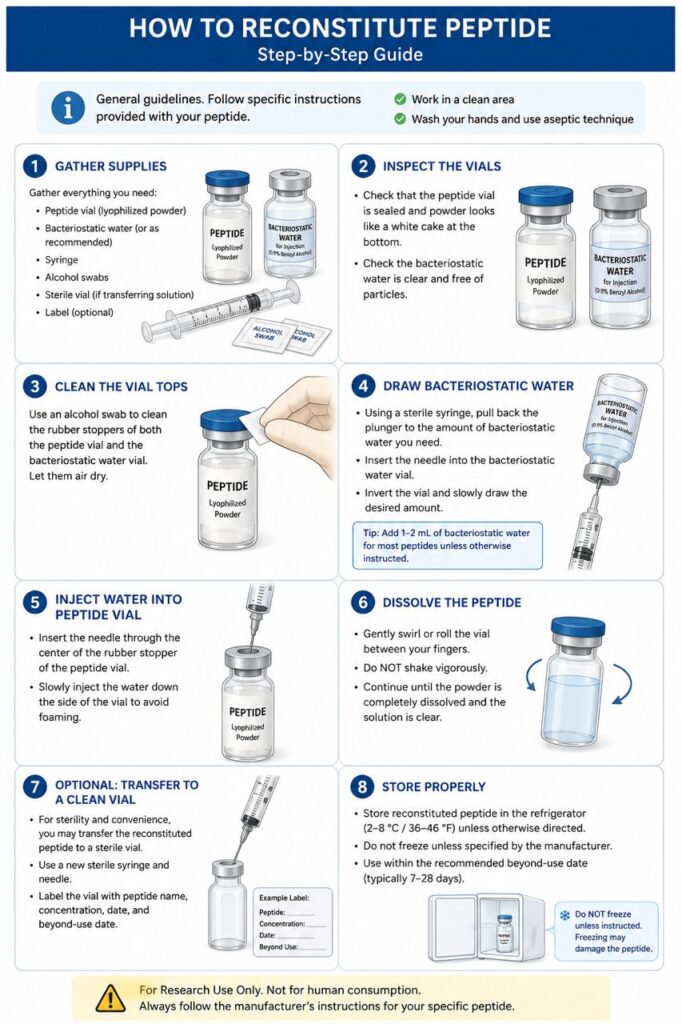
How to reconstitute peptides is an essential process in laboratory research and peptide handling. Since most peptides are supplied in a freeze dried (lyophilized) powder form, they must be properly mixed with a sterile liquid before use. This process restores the peptide into a usable solution for research purposes.
When done correctly, reconstitution preserves peptide stability and ensures accurate experimental results. When done incorrectly, it can lead to contamination, degradation, or unreliable outcomes detrimental during research or to consumers. This guide provides a clear, beginner-friendly breakdown of how to reconstitute peptides safely and effectively.
What Does Reconstituting Peptides Mean?
Reconstitution refers to the process of adding a sterile water to a freeze dried peptide powder to convert it into a liquid form suitable for research use.
Most commonly used solvents include:
- Bacteriostatic water
- Sterile water for injection
Once reconstituted, peptides must be handled with care to maintain stability.
What You Need Before Starting
Before beginning the process, ensure you have the following in place:
- Lyophilized peptide vial
- Sterile solvent (preferably bacteriostatic water)
- Alcohol swabs
- Sterile syringes
- Gloves
- Clean, sterile workspace
Maintaining sterility is critical at every step.
Step by Step Guide to Peptide Reconstitution
Step 1: Sterilize Your Work Area
Cleanliness is the foundation of proper peptide handling.
- Disinfect surfaces
- Wash hands thoroughly
- Wear sterile gloves
- Wipe vial tops with alcohol swabs
Step 2: Prepare the Sterile Water
Draw the required amount of bacteriostatic water into a sterile syringe.
- Remove air bubbles carefully
- Ensure syringe sterility is maintained
Step 3: Add the Diluent to the Peptide Vial
Slow and careful injection is important.
- Insert needle into vial
- Slowly release liquid against the inner wall of the vial
- Avoid spraying directly onto the powder
This prevents damage to the peptide structure.
Step 4: Allow Gentle Dissolution
Do not shake the vial.
Instead:
- Gently swirl in circular motion
- Allow the powder to dissolve naturally
This preserves peptide integrity and from prevents foaming.
Step 5: Proper Storage After Reconstitution
Once mixed, peptides become more sensitive.
- Store at 2°C to 8°C (refrigerator)
- Keep vial tightly sealed
- Protect from light exposure
- Avoid repeated temperature changes
Reconstituted peptides typically have a shorter lifespan than dry powder forms.
Common Mistakes to Avoid
Avoiding these errors helps maintain peptide quality:
- Shaking instead of swirling
- Using non-sterile tools or water
- Injecting solvent too quickly
- Leaving peptides at room temperature too long
- Frequent opening of the vial
How Long Do Reconstituted Peptides Last?
Shelf life depends on peptide type and storage conditions, but generally:
- 7 to 30 days when refrigerated properly (2–8°C)
Always follow specific stability guidelines for each peptide.
